How Hot Does Artificial Turf Get in Riverside Summers?
Published October 17, 2026
Yes, artificial turf gets hot, and in Riverside it gets hot often. Anyone who tells you otherwise is selling something. The useful questions are how hot, when, and what you can do about it. This article covers what the research measured, how Riverside's climate changes the picture, and the layout and maintenance choices that keep a turf yard usable from June through October.
What the research says
Two sets of studies get cited most often:
- Brigham Young University (2002). Researchers measured a synthetic surface averaging about 117°F, against about 78°F for natural grass nearby. On one hot day the synthetic surface hit a far higher peak.
- Penn State's Center for Sports Surface Research. Its summaries report synthetic turf running roughly 35°F to 55°F hotter than natural grass, with surface readings of about 120°F to 146°F on days when the air was only in the high 70s to mid 80s.
Those studies were mostly on athletic fields with black crumb-rubber infill, which runs hotter than many residential infills. Still, the pattern is consistent: in direct sun, synthetic fibers absorb heat and don't cool themselves the way living grass does through evaporation.
Why Riverside is a special case
Riverside's NOAA 1991–2020 climate normals put the average July high at Riverside Municipal Airport at about 93°F, and heat waves push well past 100°F. Unlike coastal cities, there's no reliable afternoon sea breeze to take the edge off. Riverside's dry air also means a turf surface that's been rinsed cools quickly but then heats back up just as fast once the water evaporates.
The timing matters more than the peak:
- Morning: turf is usually comfortable until mid-morning, especially if it was shaded overnight.
- Midday to late afternoon: surfaces in full sun are at their hottest. This is when to keep kids in shoes and dogs off it.
- Evening: once the sun is off the yard, turf cools within an hour or so, faster with a quick rinse.
If your family mostly uses the yard in the morning and evening, a well-placed turf yard works well. If everyone wants to be out there at 3 p.m. in August, you'll need shade.
Seven ways to keep a Riverside turf yard cooler
1. Put shade where people and pets actually go
Shade is the only thing that dramatically lowers turf temperature. A patio cover, shade sail, pergola or a mature tree over the main play area does more than any product. For dogs, a covered spot next to the turf matters.
2. Use the house as a shade source
East-facing backyards get shade from the house in the afternoon, which is a big advantage. If you have a choice of where to put a play area or putting green, choose the side that's shaded after 2 p.m.
3. Rinse before use
A short hose rinse can drop surface temperature quickly. It won't last long in dry heat, but it's enough for a play session. A hose bib or quick-connect near the turf makes this easy.
4. Choose the infill carefully
Cooling infills, often coated sand or mineral products that hold moisture, can reduce surface temperature somewhat after watering. Lighter-colored infills absorb less heat than dark crumb rubber. Neither makes turf feel like grass in full sun, so treat them as a small help, not a solution.
5. Watch for reflected heat
Low-E windows on two-story homes can focus sunlight onto a patch of turf and damage fibers. If you see a melted or discolored strip near the house, a window screen or exterior film usually fixes it.
6. Pick a blade and color that suit your yard
Some products use blade shapes and pigments designed to run cooler. Ask for specs and bring samples outside at midday to compare.
7. Turf only the areas you need
In parts of the yard nobody walks on, consider drought-tolerant beds or decomposed granite instead. Plants cool the air around them in a way turf can't.
Kids, dogs and hot turf
- Kids: shoes in the afternoon, and a hand test before play. If it's too hot for your palm for a few seconds, it's too hot for bare feet.
- Dogs: paws are sensitive. A shaded potty area and a rinse before afternoon play help. Our pet turf page covers dog-run layouts for Riverside heat.
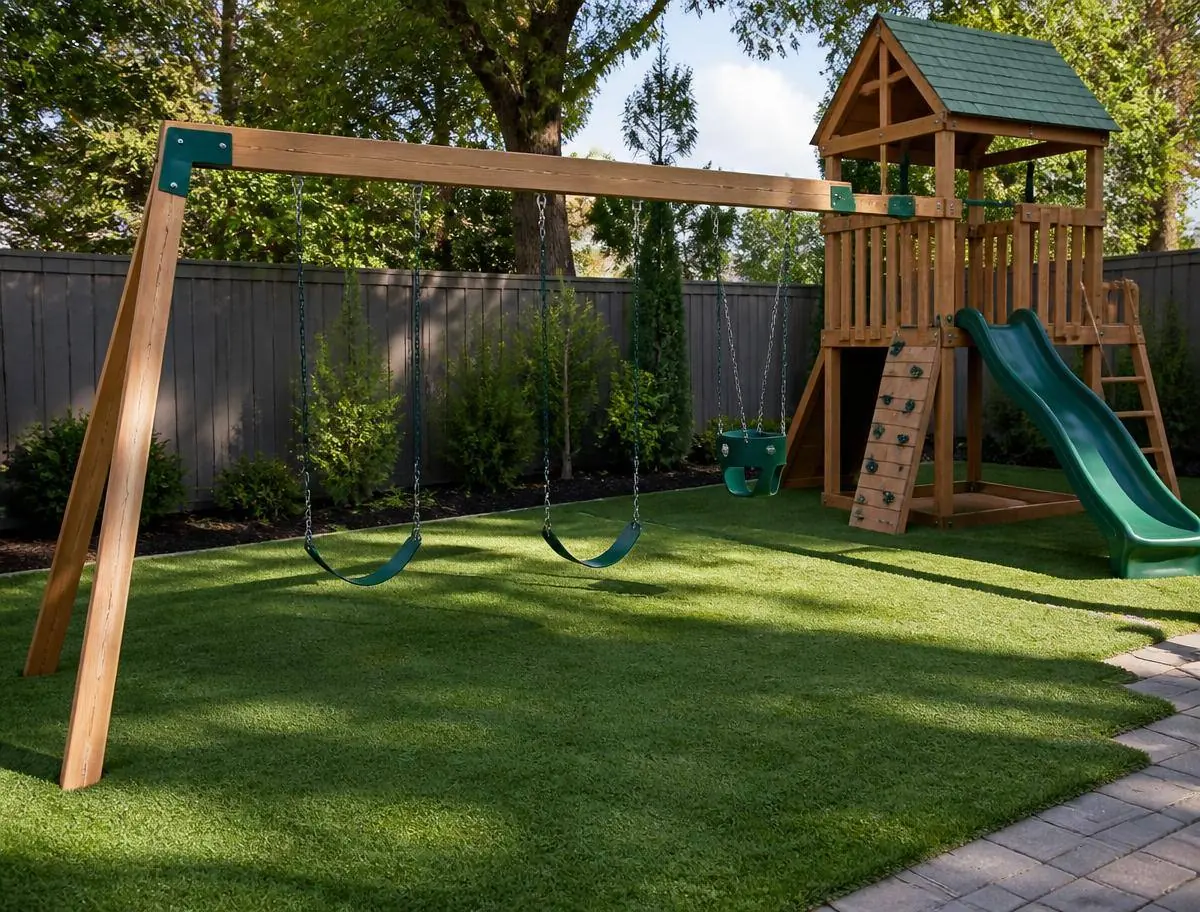
- Play structures: turf under slides and swings in full sun can get hot. Plan play equipment where it gets shade, and add a shock pad under fall zones.
Is artificial turf still worth it in Riverside?
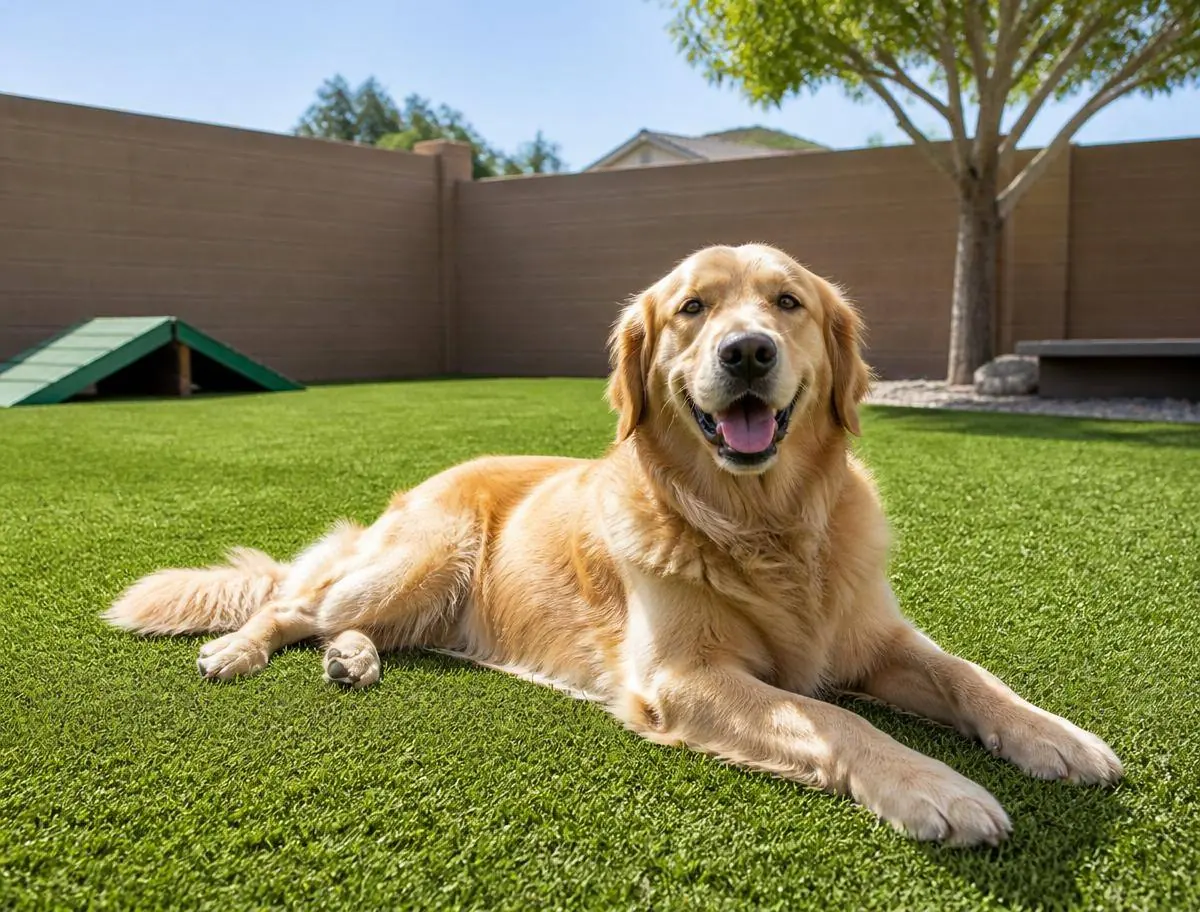
For most families, yes, with the right expectations. The trade-off is a surface that's hot in the middle of summer afternoons versus a lawn that needs heavy irrigation all summer to stay green and still goes brown in spots. If you plan shade, place play areas thoughtfully and keep a hose handy, turf gives you a clean, green, usable yard year-round. If you want to talk through your yard's sun exposure, book a free on-site estimate or call (951) 465-7562, and see artificial grass for Riverside front and back yards for how we plan layouts.
Yard orientation matters more than ZIP code, but in Riverside's newer tracts in Orangecrest (92508) and La Sierra (92505), smaller lots with few mature trees often mean full afternoon sun, while older neighborhoods like the Wood Streets (92506) tend to have more established shade trees. The advice here applies anywhere in the City of Riverside, Riverside County.