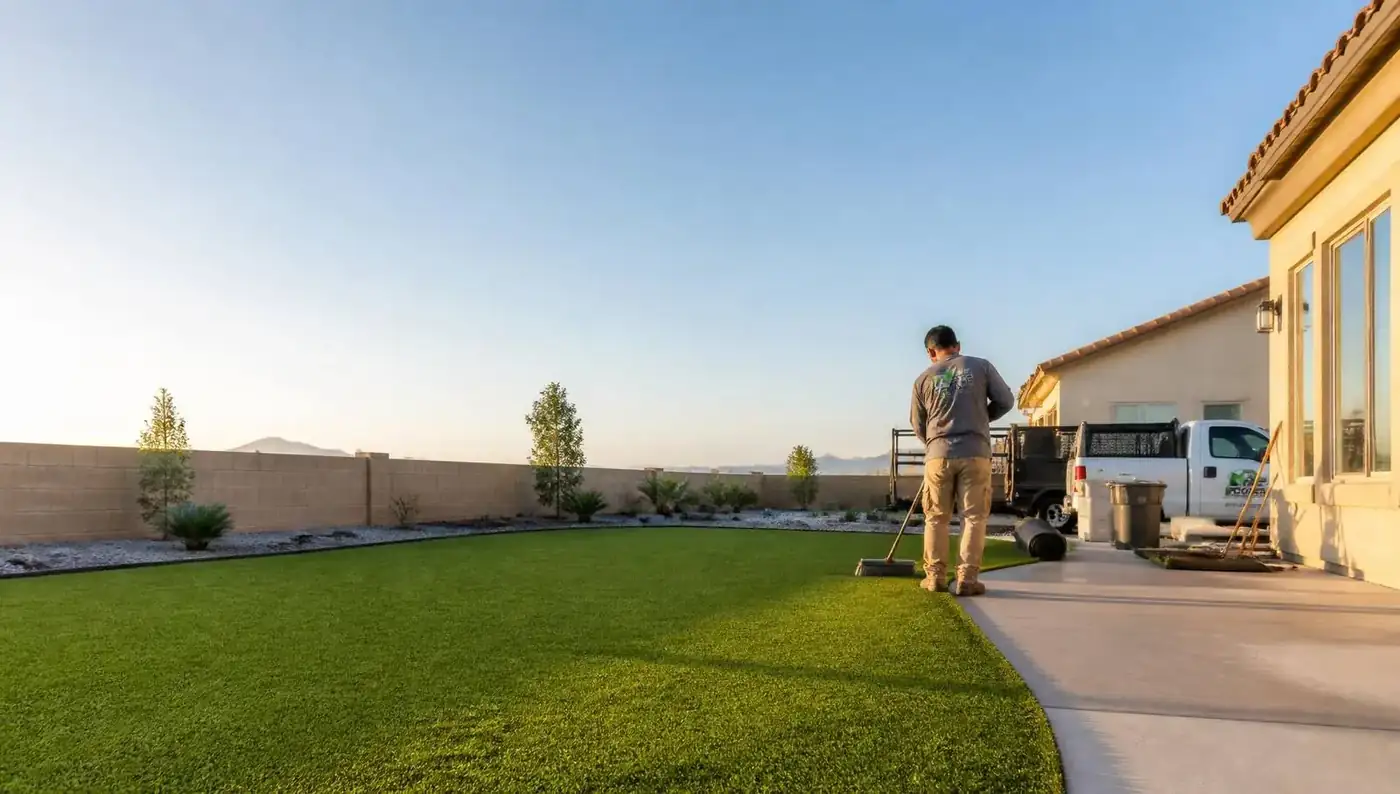
Backyard Putting Green Installation in Riverside
A putting green is the one part of a turf job where the base is the whole product. If the surface under the turf isn't shaped and compacted precisely, the ball breaks where it shouldn't, rolls slow in one spot and fast in another, and the green stops being fun to practice on. The Turf Mind builds backyard putting greens in Riverside on a base we shape by hand, then tie into the rest of your yard so the green looks like part of the landscape instead of a mat dropped on the lawn.
Planning a green for a Riverside backyard
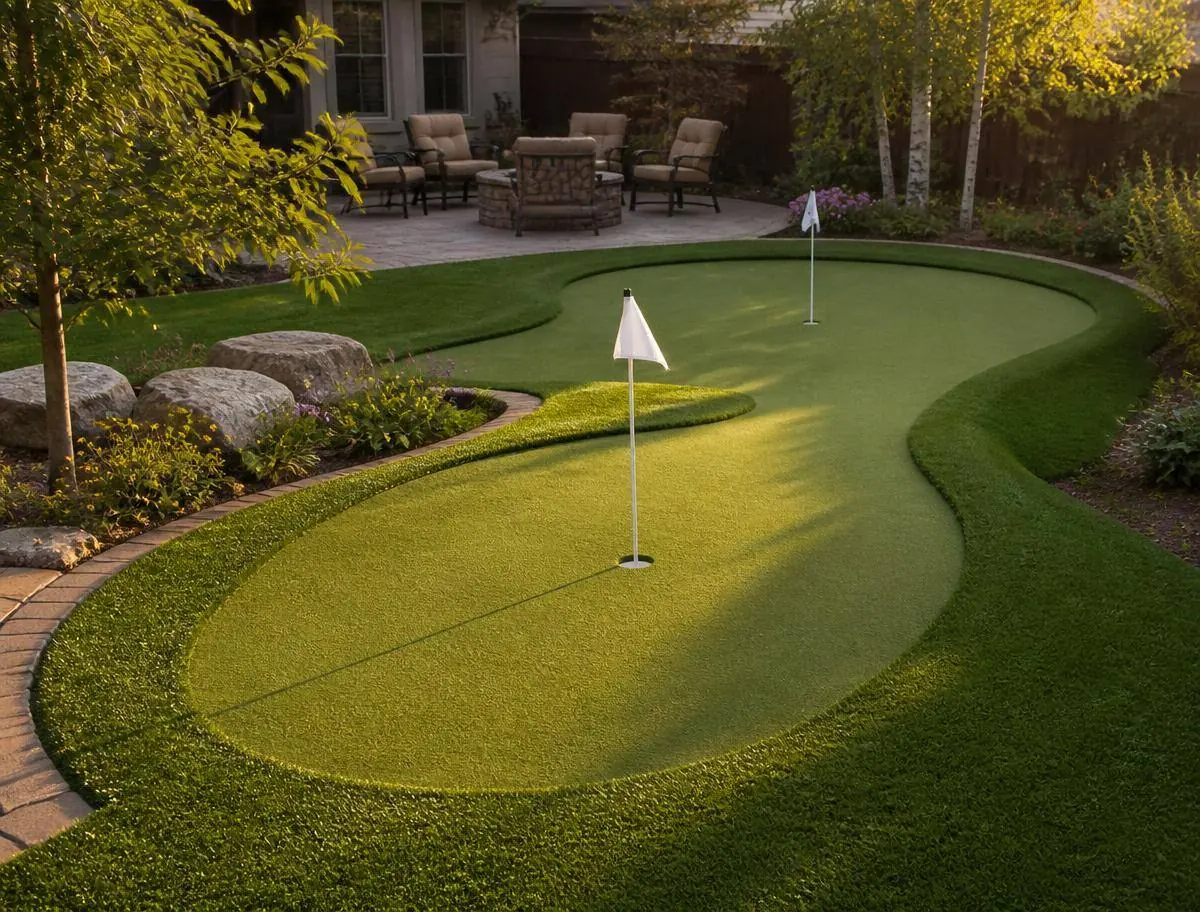
Size and shape
Most backyard greens fall somewhere between a compact practice strip and a few hundred square feet with several cups. Start with how you'll use it. If it's mainly for lag putting and short putts, a long, kidney-shaped green with two or three cups gives you different distances. If you want to chip onto it, you'll need more surface and a fringe wide enough to land the ball.
Where it goes
Sun angle matters more than people expect in Riverside. A green in full afternoon sun gets hot to the touch from June through September, so if you plan to putt after work, consider a spot that's shaded by the house later in the day. Keep the green clear of overhanging citrus, pepper or ash trees: dropped leaves and fruit get in the ball's path, and roots can lift the base over time.
Breaks and contours
A dead-flat green gets boring fast. We shape gentle breaks into the base so you can practice reading slope. A green should still drain, so every contour also needs a path for water to leave. In winter storms, water that sits on a putting surface leaves debris lines and can soften the base.
How we build it
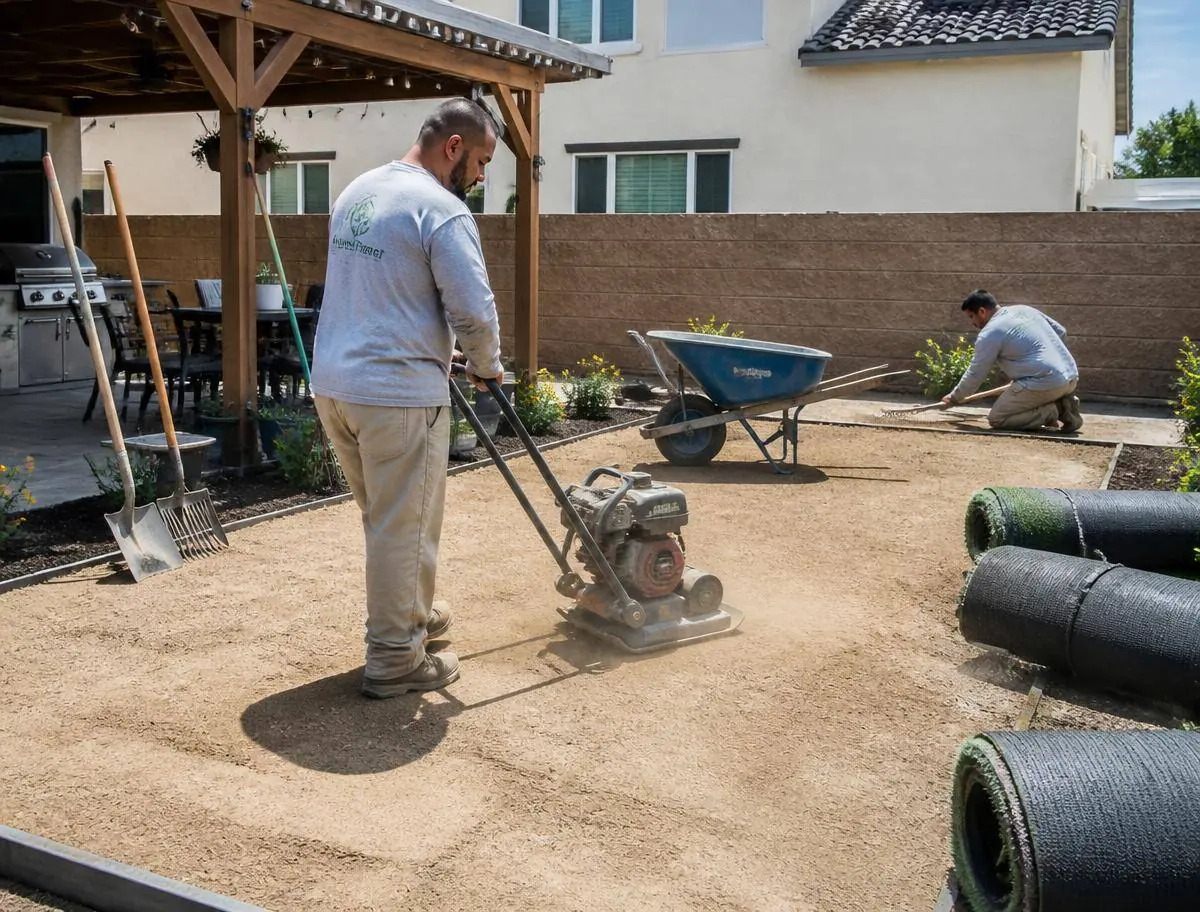
- Design walk-through. We stake out the shape with you, talk about cup locations and fringe, and check the yard's existing slope.
- Excavation. Grass, roots and soil come out to the depth your soil needs. Rocky hillside lots, like some in Canyon Crest, take more prep than the sandy loam common in older central neighborhoods.
- Base and shaping. Class II base goes in first and is compacted in layers. The top layer is a finer material that we shape and screed for the contours, then compact again until it's firm and true.
- Cups. Cups are set in the base before the turf goes down, so they sit flush.
- Putting turf. Putting surfaces use a short, dense fiber designed for ball roll. Some are sand-filled, some are not. Each plays differently and we'll show you samples.
- Fringe and collar. A slightly longer turf around the green frames it and catches chips, and it seams into the landscape turf in the rest of the yard.
- Roll test. We roll balls across every line before we leave to check speed and break.
Matching the green to the rest of the yard
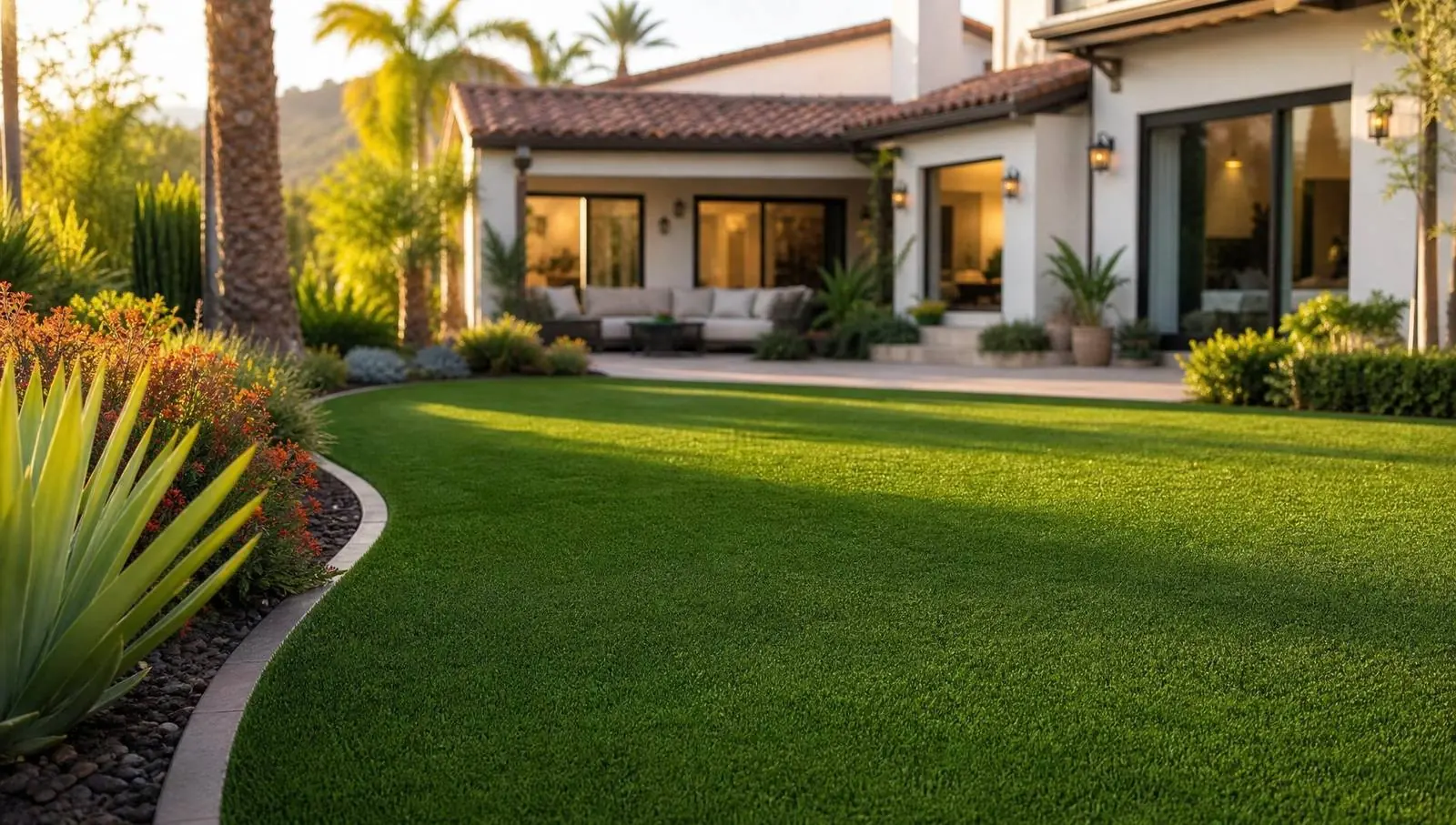
Most putting greens we build are part of a larger project. A common Riverside layout puts the green near the patio, with landscape turf around it and a decomposed granite or paver border. If you're replacing the rest of the lawn too, see backyard and front yard artificial grass in Riverside for how we handle the surrounding turf. If you have dogs, keep them off the putting surface: urine and digging are hard on a precision base. A separate pet turf area works better.
Care and maintenance
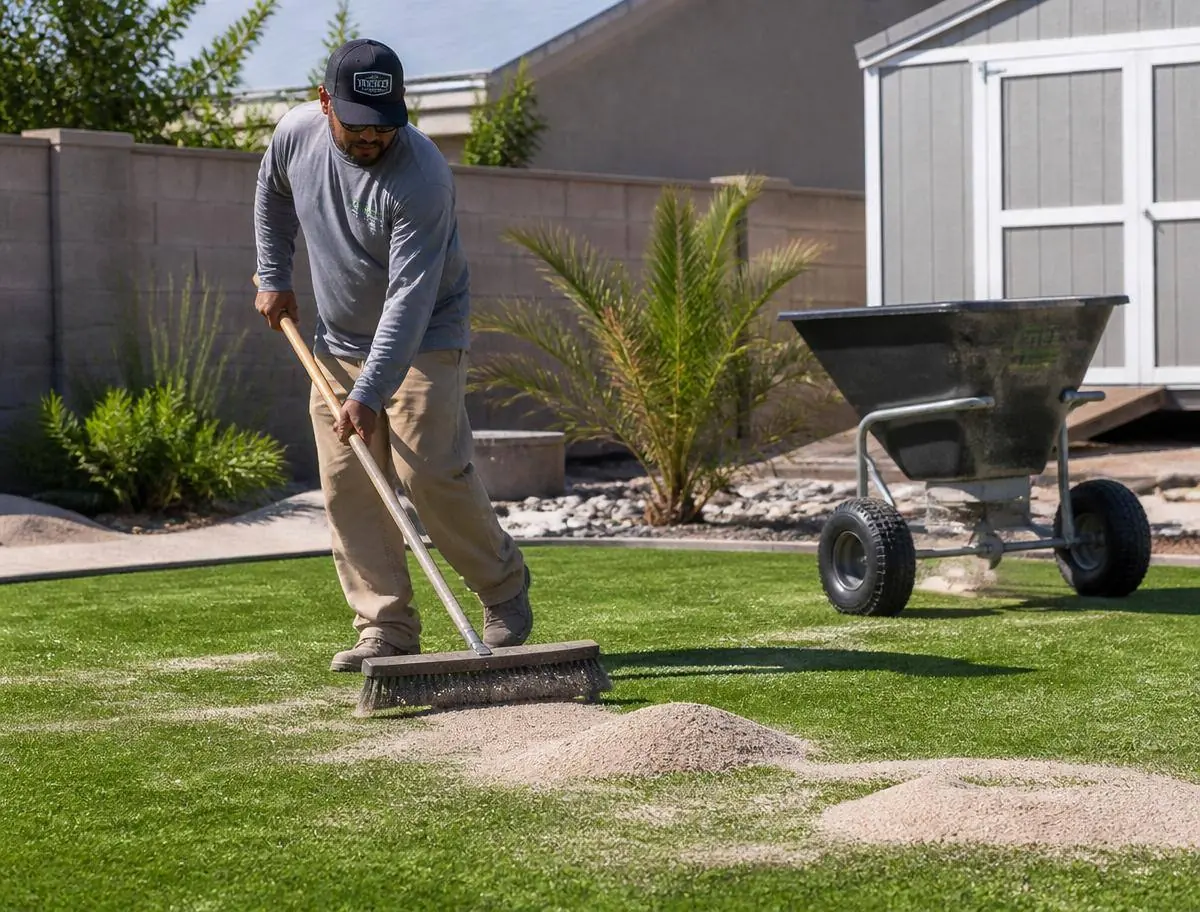
- Brush it. A light brushing every few weeks keeps the fibers consistent and the speed even.
- Blow off debris. Leaves and dust from Santa Ana wind events slow the ball and can stain infill. A leaf blower on low takes care of it.
- Top up infill on sand-filled greens. High-traffic spots around cups lose infill first.
- Check cups after storms. Make sure water is draining away from the cup area.
What drives the price
Size, number of cups, contour complexity, fringe and chipping areas, and how much base preparation your yard needs all move the price. A small, simple green costs less per square foot to design than to shape, and a complex green with tight breaks takes more hand labor. Our Riverside artificial turf cost guide covers the general price factors, and we'll give you an exact written price after the design visit.
Many of the greens we design go into Riverside backyards with room to spare: larger lots in Canyon Crest (92507), along the Victoria Avenue corridor in Arlington Heights (92503 and 92504), and on the streets around the Wood Streets in 92506. We build greens anywhere in the City of Riverside, Riverside County.